E-bike rules UK: The rising risks for young riders

E‑bikes are becoming a familiar sight across the UK, especially among younger riders. Their accessibility and resemblance to conventional bicycles can make them seem straightforward to use, but the e-bike rules UK riders need to follow are more specific than many families realise.
In this guide, we discuss:
- Whether electric bikes are legal in the UK
- The rising risks for young e‑bike riders
- The current age limit and whether it remains appropriate
- What makes an e‑bike legal or non-compliant
- Where legal e‑bikes can be used
- Why some e‑bikes are treated as motor vehicles
- Whether current UK regulations are keeping pace
- The case for dedicated e‑bike education
- Parental responsibility and legal implications
Growing concern
Legal e-bikes must meet the requirements for an Electrically Assisted Pedal Cycle (EAPC). If they do, they are treated broadly like ordinary bicycles. If they fall outside those limits, they may be treated as motor vehicles.
E-bikes can also present different safety challenges. Their added weight, motor assistance, and acceleration can change how they handle and stop in a collision, particularly for younger or inexperienced riders.
Across the country, there is growing concern about injuries involving e‑bikes, affecting riders, pedestrians and other road users. Many families may not fully understand the legal requirements or the seriousness of the injuries these machines can cause.
As a firm that represents cyclists and other vulnerable road users, we support the responsible use of legal e‑bikes. They have a valuable role in sustainable transport and everyday mobility. But we also see the impact when powerful or non-compliant machines are used without the right understanding, maturity, or awareness.
From our work, we believe that clearer guidance, better education, and stronger awareness among young riders and parents could all help reduce avoidable harm.
What makes e-bikes legal?
- It has pedals that can be used to propel it
- Maximum power of 250W
- No motor assistance above 15.5mph
Young riders and the seriousness of e-bike injuries
Some families may not realise how easily young riders can get hurt on e‑bikes. They look like ordinary bicycles, but their additional weight, acceleration, and motor assistance can make them behave differently in a collision or fall.
Hospitals are treating more young people with significant e-bike injuries, including fractures and soft-tissue injuries following incidents involving electric bikes.
Riding an e‑bike safely relies on understanding:
- How stopping distances increase at higher speeds
- The force created in a collision
- The difficulty of controlling a heavier bike
- How motor assistance affects acceleration
- The risk posed to pedestrians and other road users
For young riders, those differences can be particularly important because judgement, road awareness, and bike-handling skills are still developing.
Many young riders haven’t been taught how to manage these additional risks. And when powerful e‑bikes are used without that awareness, the consequences can be life‑changing – not only for the rider, but for the people around them.
This growing safety gap is exactly why clearer education, better guidance for parents and stronger regulation of e‑bike use is urgently needed. The current rules are not catching up with the reality of the electric bike injuries we are seeing, and change is essential to prevent more avoidable harm.
How dangerous are electric bikes?
The dangers of an electric bike are often linked to loss of control, longer stopping distances, higher collision forces, and the use of modified or overly powerful machines. The level of danger for young riders also depends on factors such as the bike’s weight, speed, power, the rider’s experience, and whether the bike complies with UK rules.
Are electric bikes legal in the UK?
Understanding electric bikes UK laws starts with whether the bike meets the legal definition of an Electrically Assisted Pedal Cycle (EAPC).
UK rules on electric bikes state that a legal EAPC must:
- Have pedals that can be used to propel it
- Have an electric motor with a maximum continuous rated power of 250W
- Stop providing motor assistance above 15.5mph
If the bike meets those requirements, it does not need to be registered, taxed, or insured as a motor vehicle. The rider must be at least 14 years old.
Do you need a licence for an electric bike in the UK?
No. You do not need a driving licence to ride a compliant EAPC. If the bike falls outside the EAPC rules and is treated as a motorcycle or moped instead, the relevant licence and other motor-vehicle requirements apply.
What about e-bikes with throttles?
A throttle does not automatically make an e-bike illegal. Certain “twist and go” bikes can still qualify as EAPCs, but models capable of propelling the rider without pedalling may need type approval before they can be legally used on the road.
How old do you need to be to ride an e-bike?
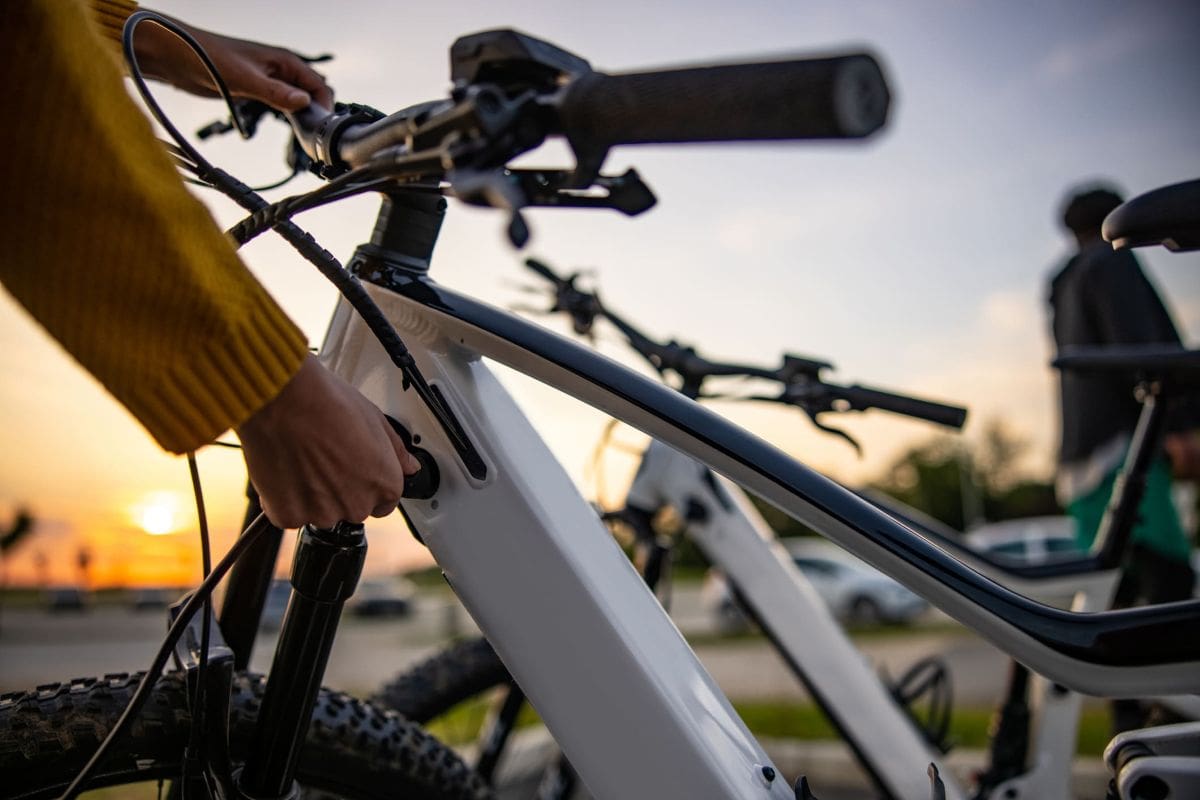
In the UK, you must be 14 or over to ride a compliant e‑bike. This age limit was introduced long before e‑bikes became as powerful, fast, and widely used as they are today.
Unlike someone learning to drive a car or motorcycle, a 14-year-old does not need a driving licence or compulsory formal training before riding a legal e-bike.
That raises an important question: does the current age threshold give younger riders enough preparation for the additional weight, acceleration, and handling characteristics of an e-bike?
Modern e‑bikes demand far more awareness, judgement, and physical control than a standard pedal cycle. A 14‑year‑old is suddenly managing levels of speed and weight that go well beyond a normal bicycle, without any formal training or guidance.
Recent reporting from UKROEd highlights a significant rise in compensation paid for injuries linked to this type of transport, underlining the growing risks faced by young riders.
If e‑bikes are to remain accessible to young people, the UK may need clearer rules, better education, and stronger guidance for families. The current age limit no longer reflects the reality of the risks young riders face.
Legal vs illegal e-bikes: What’s the difference?
The difference between e-bikes comes down to whether the bike meets the legal definition of an Electrically Assisted Pedal Cycle (EAPC). If it does, it’s treated as a conventional bicycle. If it doesn’t, it’s treated as a motor vehicle, bringing much stricter legal requirements.
What makes an e-bike legal?
An e‑bike will generally qualify as an EAPC if:
- It has pedal assistance only – the motor works only while the rider is pedalling
- Its motor has a maximum continuous rated power of 250W
- The motor cuts out at 15.5 mph, so you can pedal faster than 15.5 mph, but the motor must disengage
The e-bike must also display the required information, including its continuous rated power and manufacturer.
If a bike meets these rules, it is classed as an Electrically Assisted Pedal Cycle (EPAC).
Why are some e-bikes illegal in the UK?
Electric bikes themselves are not illegal. An e-bike is illegal if:
- Its continuous rated motor power exceeds 250W
- The motor continues propelling the bike above 15.5mph
- It does not have usable pedals
- It has been modified so that it exceeds legal limits
Under UK law, electric bikes that meet the EAPC requirements are treated broadly like ordinary bicycles. Once a bike falls outside the EAPC definition, it may be treated as a motor vehicle in law.
Why non-compliant e-bikes are treated as motor vehicles
Illegal e‑bikes fall outside the EPAC definition. In law, they are classed as motor vehicles because they deliver power and speed beyond what is permitted for a bicycle. That means they require licensing, insurance, safety helmets, registration, and vehicle tax.
A non-compliant e-bike cannot be ridden on the road as though it were an ordinary bicycle.
Where can legal e-bikes be used?
A compliant EAPC can generally be used anywhere a normal pedal cycle is allowed, including roads, cycle lanes, and cycle tracks. It cannot be ridden on pavements intended only for pedestrians.
“We are seeing children riding e-bikes that are capable of causing life-changing injuries, often without any real understanding of the risks involved”
Are current e-bike regulations sufficient?
The rules on e-bikes in the UK have not kept pace with how they are now being used.
In 2024, the Department for Transport consulted on two possible changes to the EAPC rules:
- Increasing the maximum continuous rated motor power from 250W to 500W
- Allowing “twist and go” throttle assistance up to 15.5mph without the existing type-approval requirements
In January 2025, the government confirmed that it would not take either proposal forward. It concluded that there was sufficient evidence to justify the changes and that concerns raised about safety and regulation could not be ruled out.
That means the current 250W and 15.5mph framework remains in place.
At the same time, police forces across the UK, including Greater Manchester Police, are reporting a rise in the use of e-bikes in criminal activity, anti‑social behaviour, and dangerous riding.
Illegal e‑bikes are widely available online, often sold without clear warnings about UK requirements. Many families do not realise that the e‑bike their child is riding may not qualify as an ordinary pedal cycle under UK law.
Key concerns include:
- Limited public understanding of what makes an e‑bike legal
- Easy access to illegal e‑bikes
- Risky and anti‑social riding behaviours involving e-bikes
- No structured safety education to help young riders
- Inconsistent enforcement across regions
- No national guidance for parents or schools
From Fletchers’ experience supporting injured cyclists and vulnerable road users, the issue is not simply whether the legal limits are clear on paper, but whether young riders and families understand what they mean in practice.
Clearer education, better information at the point of sale, and more practical guidance could all help reduce avoidable harm.
UK Bikeability training: Is there a space for e-bike education?
Bikeability is funded by the Department for Transport and delivered by trained instructors across England, mostly through schools. It follows three levels of training designed to help children aged 7-14 develop safe cycling skills and road awareness.
The programme does not currently offer dedicated e-cycle or e-scooter training. As e‑bike use grows, there is a case for considering whether younger riders would benefit from training that reflects the specific characteristics of electric bikes.
A structured e‑bike programme could cover:
- Safe braking and stopping distances
- Controlling a heavier bicycle
- Managing motor assistance
- Understanding the 250W and 15.5mph limits
- Identifying non-compliant e‑bikes
- Understanding road rules and pedestrian safety
- The consequences of modifying an e-bike or causing injury
- Guidance for parents on safe supervision
Such training would give young riders structured support in handling the speed and weight of e‑bikes, understanding the extra responsibility and potential consequences, and helping to reduce the risk of serious injury. Without this training, young riders will continue to face risks that current guidance does not prepare them for.
UK e-bike rules and parental responsibility
Many parents purchase e‑bikes believing they are simply enhanced bicycles. In reality, some models sold as “e-bikes” fall outside the EAPC rules and may be legally treated as motor vehicles.
Parents should be aware that:
- An e‑bike may not qualify as an EAPC if it exceeds UK limits
- Modifications can change the bike’s legal status
- Non-compliant machines may require registration, licensing, and insurance
- E-bike collisions can cause serious injuries
- Riders must be at least 14 to use an EAPC
Parents should check the specification and legal status of any e-bike before buying it and consider whether the young rider has the maturity and road awareness to use it safely.
Summary of e-bike rules in the UK
- Minimum age: 14
- Maximum continuous rated motor power: 250W
- Maximum motor-assisted speed: 15.5 mph
- Usable pedals required: Yes
- Driving licence for a compliant EAPC: No
- Registration: No
- Vehicle tax: No
- Compulsory motor insurance: No
- Pavement riding: Not permitted
- Non-compliant e-bikes: May be treated as motorcycles or mopeds
- Throttle-only operation: Can require type approval
“Understanding these rules is essential for families, schools and local authorities, particularly as e‑bike use among young people continues to grow.”
Lena Farnell, Associate & Team Leader
E-bike pros and cons
E-bikes can have clear advantages.
They can:
- Make longer or hillier journeys more accessible and comfortable
- Help some people cycle who might otherwise struggle
- Provide an alternative to some car journeys
- Support commuting and active travel
Government guidance also recognises e-cycles as an important part of active travel and lower-carbon transport.
But there are also risks, particularly where bikes are modified, poorly maintained, illegally powerful, or used by inexperienced riders.
The issue is not whether e-bikes are inherently unsafe, but whether they are compliant, well-maintained, and ridden with the skills and awareness needed.
“The law places responsibility on young people while giving them access to e-bikes. A structured training programme would help them understand the risks and develop the skills needed to manage modern e-bikes legally and safely.”
More can be done to keep young riders and the public safe as e-bike use grows
E‑bikes have an important place in modern transport, but their speed, weight, and power mean young riders face risks that the current rules do not fully address.
Injuries are rising, illegal e‑bikes are easy to access, and families are often unaware of the legal and safety implications. The UK’s existing approach is struggling to keep pace with how e‑bikes are actually being used.
From our work with injured cyclists and vulnerable road users, it is clear that the UK cannot rely on outdated guidance to protect young riders. The law needs to reflect modern e‑bike capability and behaviour, and families need clearer, more accessible information that should include:
- What makes an e‑bike legal
- Responsible use
- Rider behaviour
- The risks associated with illegal e‑bikes
The government’s decision not to increase the EAPC power limit or relax throttle rules means the legal framework itself remains unchanged for now. That makes education and awareness particularly important if e-bike use among young riders continues to grow.




A national team, here when you need us
With offices across the UK, we’re never too far away, helping people access specialist advice and support wherever they are.
-

THE TIMES BEST LAW FIRM
-
CHAMBERS TOP RANKED LAW FIRM
-
LEGAL 500 TOP TIER FIRM
-
ARMED FORCES COVENANT
-
AVMA - LAWYERS’ SERVICE MEMBER
-
HEADWAY ACCREDITED SOLICITORS
-
SIA - TRUSTED LEGAL PARTNER
-
CBIT - TRUSTED LEGAL PARTNER











Start your claim with confidence
Not sure where to start? We’ll listen, guide you, and give clear, honest advice on what to do next.
FAQs
What is an e-bike?
An e‑bike is a bicycle with an electric motor that provides pedal assistance. If it meets UK limits on power and speed, it is treated as a standard pedal cycle.
Are e-bikes legal in the UK?
An e‑bike is legal in the UK if it has pedal assistance, a motor no more than 250W, and stops providing power at 15.5 mph.
What makes an e-bike illegal?
An e‑bike is illegal if it exceeds 250W, provides power above 15.5 mph, has a full‑speed throttle, or has been modified to go faster.
Do you need insurance for an e-bike?
Insurance is not required for legal e‑bikes. Non-compliant e‑bikes require motor insurance, and riding without it is an offence.
How old do you have to be to ride an e-bike?
You must be 14 or over to ride a legal e‑bike in the UK.
How fast can an e-bike go?
A legal e‑bike can assist you up to 15.5 mph. You can pedal faster, but the motor must stop providing power.
Can you modify an e-bike and still keep it road legal?
Possibly, but only if the modified bike still complies with the EAPC requirements. If a modification increases the motor power above 250W or allows the motor to propel the bike above 15.5mph, it may become a motor vehicle in law.
Can you ride an e-bike on the pavement?
A compliant EAPC is treated much like a conventional bicycle and cannot be ridden on pavements intended only for pedestrians.
What happens if you use an illegal e-bike on the road?
If an e-bike falls outside EAPC rules and is used on the road without meeting the requirements for a motor vehicle, the rider may face penalties, and the bike may be seized.
Government safety guidance also warns that modified bikes can lose insurance protection and may present additional fire and mechanical risks.