
Amputation claims
An amputation changes everything. If you have lost all or part of a limb because of someone else’s negligence, you may be entitled to make an amputation claim.
-
-
 TOP-RANKED LEGAL EXPERTS
CHAMBERS & LEGAL 500
-
NO WIN, NO FEE




Can I make an amputation claim?
Amputation claims can be made when you’ve lost a limb, or partial limb, because of someone else’s negligence. Experiencing an amputation can be traumatic and life-changing. It may affect your mobility, independence, work, relationships and everyday routines.
You may be able to make an amputation compensation claim if your injury happened because of:
- A road traffic collision
- A motorbike accident
- An accident at work
- An accident in a public place
- A construction accident
- A serious crush injury
- Another accident caused by someone else’s negligence
Both complete and partial limb loss can potentially form the basis of amputation injury claims.
Even if you’re unsure whether your circumstances qualify, or if some time has passed since your injury, it’s still worth speaking to us. Our team can explain whether there may be grounds to pursue compensation for amputation, and what the next steps would involve.
Example of an amputation claim
Imagine a warehouse operative whose hand becomes trapped in unguarded machinery. As a result, several fingers are amputated, requiring surgery, a lengthy recovery, and significant time away from work.
If the machinery lacked adequate safety guards and the employer didn’t follow the required safety regulations, this could be a valid amputation claim.
Common amputation claims we can support with
Expertise you can trust
- 9/10 clients would recommend us
- APIL Accredited Experts
- Securing interim payments to ensure early access to support
What amputation compensation can help with


Recovering lost income and covering future care.
Amputation compensation is not just about acknowledging your injury and what happened. It’s about making sure you have financial security to rebuild your life and access the support you need, whether in the short term or for the long term.
A successful amputation compensation claim may help fund:
- Prosthetics and specialist limb fitting, including advanced prostheses
- Rehabilitation, physiotherapy, and occupational therapy
- Psychological support and counselling
- Home adaptations and specialist mobility equipment
- Current and future loss of earnings
- Ongoing care and support
- Travel and transport costs related to your recovery
Depending on your circumstances, compensation can also take account of the pain, suffering, and loss of amenity caused by the injury.
What compensation can provide
We secured a seven-figure settlement for Tony, which allowed him to buy a new home to accommodate his needs and fund an advanced Empower prosthetic, helping him return to the activities he loved before his injury.
No two amputation compensation claims are the same. The value of a claim depends on factors including:
- The severity of your injury
- Your age and prognosis
- Whether more than one limb is affected
- How it affects your ability to work
- The level of care you need going forward
- Rehabilitation needs
- Home or vehicle adaptations
- The wider impact on your independence and quality of life
Serious loss of limb claims can involve substantial compensation because the financial and support needs may continue throughout a person’s life.
Understanding interim payments
We understand that waiting for an amputation claim to finish can put considerable financial pressure on you and your family.
Where possible, we’ll secure interim payments on your behalf while the claim is ongoing. These are advance payments from the compensation that may eventually be awarded and can help meet urgent needs before the final settlement.
Interim payments might mean that you’re able to access prosthetics, rehabilitation, and additional care. You shouldn’t have to wait until the end of your claim to get the support you need.




Why choose Fletchers for your amputation claim?
Amputation claims are among the most serious and complex in personal injury law. The team around you really matters. At Fletchers, our solicitors specialise in serious personal injury and catastrophic injury claims – including amputations. We bring together legal expertise, clinical insight, and genuine care to give every person we support, the best possible chance of a successful outcome.
Expertise you can rely on
- Specialist amputation and catastrophic injury solicitors, with decades of combined experience
- Ranked by Legal 500 as a leading firm in serious personal injury law
- In-house rehabilitation team, working with leading clinicians and prosthetic specialists from the earliest stage of your claim
- Multi-million-pound settlements secured for clients who have suffered limb loss
- Rated excellent on Trustpilot by the clients we’ve supported
- No win, no fee, so you can pursue your claim without financial risk
You’re not alone
We understand what you’re going through.
Living with the loss of a limb affects every part of your life. Beyond the physical recovery, many people experience a real change in their confidence, sense of identity and independence. Getting back to work, driving, keeping up with family life, and doing the things that mattered to you before — all of this takes time. It’s so important to have the right support and access to specialist care right from the start.
We also understand that the financial pressure of losing a limb can feel overwhelming. Lost income, adaptations to your home, specialist equipment, ongoing therapy and care costs can mount up quickly — creating additional strain at a time when you should be focused on recovery.
We have supported many clients in exactly this position. People who felt uncertain about whether they had a claim. People who were exhausted, worried about the future and unsure who to trust. What they had in common was that they needed someone to listen, to understand, and to take on the hard work on their behalf. That is what we’re here to do. We’ll handle every part of the process, keep you informed at every step, and fight for compensation that truly reflects the impact of what has happened to you.

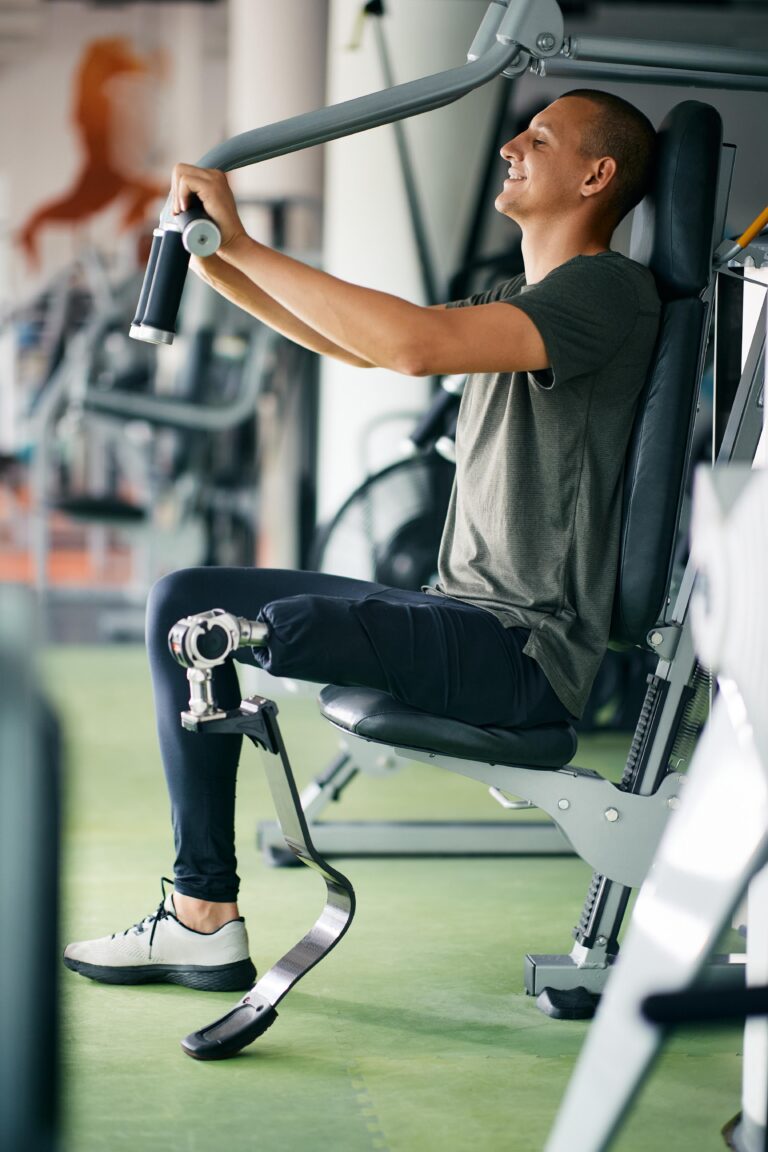
Rehabilitation support
We go beyond legal advice to support you, not just your case, making sure the right care and practical help are in place throughout the compensation claim process.
A message from our Rehabilitation and Wellbeing Team
We work alongside Fletchers Solicitors’ legal experts – listening carefully to your needs, helping you understand what support is available and creating a personalised recovery plan.
Led by rehabilitation manager Julie Chorlton, we bring together expertise across healthcare, therapy and welfare support, and can help arrange access to treatment and financial support. We also work with accredited mental health professionals, giving you and your family access to counselling quickly.
OUR REHABILITATION & WELLBEING TEAM


FAQs about amputation claims
What should I do after an amputation caused by an accident?
Your immediate priority should be medical treatment and recovery. Once you are able, there are some practical steps that can help protect your position if you later decide to make an amputation injury claim.
- Keep details of what happened: Make a note of the circumstances surrounding the accident while they are still relatively fresh.
- Preserve evidence: Depending on how the injury happened, this could include photographs, CCTV, accident reports, witness details, or workplace records.
- Keep records of financial losses: Save payslips, invoices, and receipts showing costs or loss of income connected with your injury.
- Keep information about treatment and rehabilitation: Details of hospital treatment, prosthetic assessments, therapy, and rehabilitation can become important when understanding the full impact of the amputation.
- Seek specialist legal advice: Amputation claims can involve significant future needs. Speaking to a specialist amputation claims solicitor early can help ensure evidence is protected and that rehabilitation and interim-payment needs are considered from the outset.
What is the amputation claims process?
Every amputation claim is different, but the process will usually involve several stages.
1. Initial assessment
We’ll listen to what happened, how the injury occurred, and how the amputation is affecting your life. We can then explain whether there may be grounds for a claim and how it could be funded.
2. Investigation & evidence gathering
Your solicitor will gather evidence to establish who was responsible for the accident. This may involve accident reports, witness evidence, photographs, workplace records, or other relevant documentation.
3. Assessing your needs
We will consider both your immediate losses and the long-term financial consequences of the injury. Where possible, we’ll also seek interim payments so you can access the support you need while your amputation compensation claim is ongoing.
4. Compensation
Once the evidence is sufficiently developed, we will seek a settlement that reflects the full impact of your injury. Most personal injury claims are resolved without a trial, although court proceedings can sometimes be necessary where responsibility or the value of a claim cannot be agreed.
How long do I have to make an amputation claim?
In most personal injury cases in England and Wales, you have three years from the date of the accident to make a claim. There are important exceptions, though.
Where the injured person was under 18 at the time of the accident, the usual three-year period does not begin until their 18th birthday. Different rules can also apply where someone lacks the mental capacity to conduct legal proceedings.
Since limitation rules can depend on the circumstances, it’s better to seek advice early rather than assume you still have time.
How long does an amputation claim take?
Amputation claims are complex in nature, and more serious claims can take a number of years to settle. The timeline of your case depends on a number of factors, including the time taken to gather all the evidence, engagement from the other side, and negotiations on liability.
While the claim progresses, we focus on securing early rehabilitation and interim payments wherever possible.
What evidence is needed for an amputation claim?
You do not need to have collected all the evidence yourself before contacting us. Our amputation claim solicitors can help gather and assess the information needed to investigate your claim.
Evidence may include:
- Medical records
- Hospital reports
- Photographs
- Witness statements
- Accident reports
- CCTV or other footage
- Prosthetic assessments
- Rehabilitation records
- Employment and earnings information
- Receipts and evidence of other financial losses
Independent medical, rehabilitation, prosthetic, and care experts may also be instructed where appropriate. The evidence needs to establish not only how the injury happened, but also how the amputation is likely to affect you throughout life.
What support is offered during my amputation claim?
Our amputation claims team works alongside independent medical experts, rehabilitation specialists and occupational therapists to build the strongest possible case on your behalf.
We don’t just handle the legal side. We coordinate the broader support you need, from early access to prosthetics and therapy to help with home adaptations and returning to work. When you come to us, you have a whole team working for you.
What is an amputation that wasn’t your fault?
An amputation that wasn’t your fault refers to situations where an individual loses a limb as a result of an accident that wasn’t their fault. This can have a significant impact on every aspect of an individual’s life, from their physical and emotional well-being to their independence, mobility, and livelihood.
Our amputation solicitors understand how devastating an amputation caused by others can be, and we’re here to provide the specialist support you need. With a wealth of experience in handling complex amputation claims, our amputation claims lawyers are committed to helping clients secure justice and the compensation they deserve.
Can I claim compensation if the amputation was partially my fault?
You may still be able to claim amputation compensation if you were partly responsible for your accident. In these situations, your compensation may be reduced to reflect your share of responsibility. This is known as contributory negligence.
Can I claim for a partial amputation?
Yes, an amputation injury claim can potentially be made for a partial amputation, including fingers, toes, or part of a hand or foot, where another party’s negligence was responsible.
The amount you receive will depend on how the injury impacts your daily life and future prospects, among other factors.
What if I need long-term care?
Long-term care needs are central to how we value loss of limb claims. We work with care experts to build a detailed projection of lifetime support, equipment, and adaptations, so your settlement reflects what you’ll actually need.


A national team, here when you need us
With offices across the UK, we’re never too far away, helping people access specialist advice and support wherever they are.
You’re in safe hands
-
THE TIMES BEST LAW FIRM
-
CHAMBERS TOP RANKED LAW FIRM
-
LEGAL 500 TOP TIER FIRM
-
ARMED FORCES COVENANT
-
SIA - TRUSTED LEGAL PARTNER
-
HEADWAY ACCREDITED SOLICITORS
-
CBIT - TRUSTED LEGAL PARTNER









Start your claim with confidence
Not sure where to start? We’ll listen, guide you, and give clear, honest advice on what to do next.
Every step forward, whether it’s accessing a specialist therapist, planning for adapted living, or securing early interim financial support to help ease the financial burden on clients and their families, contributes to slowly rebuilding their confidence and independence and enables them to have the best quality of life possible.
Anything I've needed via Fletchers has been addressed, from education to limbs. Whatever you say, I've got.