The role of rehabilitation when recovering from spinal injuries

Recover. Rebuild. Thrive.
A spinal cord injury can change the way someone lives, affecting independence, daily routines, and future plans.
At Fletchers, we see the person behind the injury. We understand the challenges, the uncertainty, and the small victories that matter most. Through expert legal support, rehabilitation planning, and access to specialist care, we help our clients rebuild confidence, regain independence, and create a life they can live well.
There are an estimated 50,000 people in the UK living with a spinal cord injury and each year approximately 2,500 people are newly injured. Unfortunately, for those who suffer a spinal cord injury, their life, and often those of their families are turned upside down in an instant, leaving them with many questions about what the future will hold. Dealing with life after injury impacts all aspects of a person’s life and this is where rehabilitation plays such a fundamental role.
In this guide we discuss:
- The life-changing impact of a spinal cord injury on individuals and families
- The goals of rehabilitation, from independence to long-term care planning
- The different stages of rehabilitation: acute, inpatient and outpatient care
- The role of rehabilitation teams, assistive technology, and home adaptations in supporting recovery
- Case studies showing how rehabilitation, case management, and settlements have helped in their hardest moment
- How long rehabilitation can take and the importance of early and ongoing support
What is the goal of rehabilitation following a spinal cord injury?
Every spinal cord injury is unique and therefore any rehabilitation must also be tailored around the injured party to support them, and to help maximise their ability to adapt, adjust and go on to lead an independent and fulfilling life.
That being said, there are some common goals which rehabilitation seeks to achieve:
- To improve the quality of life after injury
- To maximise independence
- To keep levels of activity as high as possible, despite reduced function
- To facilitate neural recovery, when and where possible
- To help determine any lifelong care needs to minimise the occurrence of long-term complications
How Rehabilitation Helped Jackie Rebuild Her Independence After Negligent Surgery
Jackie suffered a spinal stroke after her blood pressure was permitted to remain at a critically low level during surgery, resulting in incomplete paraplegia. With early rehabilitation planning in place, and following the successful resolution of her legal claim, Jackie was able to access specialist therapies tailored to her needs. Her settlement also enabled her to purchase and adapt a suitable property, significantly improving her independence and overall quality of life.
Learn more about Jackie’s story here.
The different stages of rehabilitation
- Acute Rehabilitation:
The first stage of the rehabilitation journey is known as the ‘acute phase of rehabilitation’. This is the initial immediate treatment that the injured party receives following an injury and will often take place at a major trauma centre who will complete a full assessment of the injuries to determine the true nature and severity of the injuries. They will consider and carry out surgery if required. - Inpatient rehabilitation:
After the acute phase of rehabilitation, the patient will start the next stage in the rehabilitation journey, known as inpatient rehabilitation. This may take place within the major trauma centre, or they may be transferred to a specialist centre who specialises in providing rehabilitation for those who have suffered a spinal cord injury. The primary focus will be to consider what therapeutic input the patient might require, to build up and improve strength and functional ability. The ultimate aim will be to provide education and support to enable the spinal injured party to adapt and develop various new skills, so they can be as independent as possible with completing tasks of daily living, and helping ensure that that they will be better equipped to manage once discharged back home. - Outpatient rehabilitation:
This is the rehabilitation that continues after being discharged from hospital or spinal rehabilitation centre. This is where the patient is able to put into practice all of the skills they have learned during the inpatient rehabilitation stage. Discharge should not mean the end of rehabilitation, and ideally this should continue, in order to ensure the best possible recovery.
Rehabilitation after discharge can be a daunting and overwhelming prospect. Instructing a case manager to support with this transition can be invaluable, as they can assist with assessing specific ongoing rehabilitative needs, with discharge planning from hospital, and can also help to organise and put in place a private rehabilitation team once home.
For those who are pursuing a legal claim in relation to the injury, our specialist team can assist with the instruction of a case manager. We have great relationships with many specialist case managers up and down the country, who will be able to ensure continued access to rehabilitation for as long as is required. The case manager will also be able to assist with vocational and recreational rehabilitation to help ease the return to work. They will also help individuals to access or try out activities that can provide mental and physical stimulation, as well as the ability to socialise with others who have suffered similar injuries.
How Case Management and Interim Payments Supported Recovery After a Spinal Injury
After a serious cycling accident, our client was left with permanent spinal injuries that dramatically affected their daily life.
With the support of a dedicated case manager and early interim payments, they were able to access tailored specialist rehabilitation and adapted accommodation straight away. This ensured their recovery could begin immediately, without waiting for the legal claim to conclude. Following the successful resolution of the case, they received a life-changing £8.25m settlement, which helps to provide long-term security and the resources needed to continue their rehabilitation journey.
Who will be in the rehabilitation team?
A rehabilitation team consists of various clinicians who have experience supporting those with a spinal cord injury. Whilst not an exhaustive list, the team may include a Consultant in Spinal Cord Injury, Dietitian, Nurses, Orthotist, Occupational Therapist, Pharmacist, HCPC registered Clinical/Counselling Psychologist and Liaison Psychiatrist, Physiotherapist, Speech and Language Therapist, Urologist, and Recreational and Vocational Therapists.
The rehabilitation team will not only be able to prescribe treatment for any associated complications of spinal cord injury but will provide education on wider issues such as shoulder protection, wheelchair maintenance, spasticity management, pain management, bladder and bowel management, tissue viability, sexual function and fertility, and respiratory & ventilator management if needed.
Assistive technology and adaptations
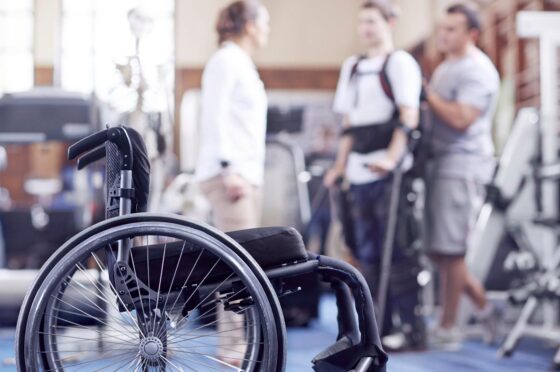
Rehabilitation also offers the opportunity to trial equipment and assistive technology that will help with mobility, and with the ability to carry out daily tasks. Consideration will also be given to the injured person’s external needs following discharge; considering whether their accommodation is suitable, or whether any adaptions need to be made to their home. Patients may also be referred to social services, for a more detailed assessment.
Patients may be signposted towards charities such as the Spinal Injuries Association (SIA) to ensure access to guidance, that will maximise and make the most of life after injury, and to support a reintegration to the community, following a discharge from hospital.
How Adapted Accommodation and Ongoing Care Supported Jack’s Independence
After a serious car accident left Jack with an incomplete spinal cord injury at C10, his recovery required more than just hospital rehabilitation. With expert guidance, he was able to trial specialist equipment and assistive technology to improve mobility and manage daily tasks. Consideration was also given to his living environment, with adaptations made to his home to ensure safety and independence. Ongoing support from a case manager and access to social services helped Jack adjust to life at home, while involvement in community activities, including wheelchair basketball, supported both physical recovery and social reintegration.
Read more about Jack’s story here.
How long will rehabilitation take?
Everyone’s rehabilitation journey is unique and there is no definitive answer as to how long rehabilitation will take, but it is not uncommon for rehabilitation to continue for in excess of 18 months. What is important, is that access to rehabilitation is available at the earliest possible opportunity so as good a recovery as possible can be achieved and that the injured party has the support and assistance to help them adapt to life following injury.
At Fletchers, we understand the importance of rehabilitation and the difference it can make. We want only the best for our clients and seek to arrange rehabilitation at the earliest possible juncture and ensure that it continues for as long as required to ensure the best recovery, independence and quality of life can be achieved following injury.
If you or a loved one has suffered a spinal cord injury, we want to help in any way we can. For more information on how we can help, please contact us online.
Sources
https://www.backuptrust.org.uk/spinal-cord-injury/what-is-spinal-cord-injury
https://www.mascip.co.uk/sci-charities/list-other-sci-organisations-links/
Our awards
-

THE TIMES BEST LAW FIRM
-
CHAMBERS TOP RANKED LAW FIRM
-
LEGAL 500 TOP TIER FIRM
-
ARMED FORCES COVENANT
-
AVMA - LAWYERS’ SERVICE MEMBER
-
HEADWAY ACCREDITED SOLICITORS
-
SIA - TRUSTED LEGAL PARTNER
-
CBIT - TRUSTED LEGAL PARTNER










Start your claim with confidence
Not sure where to start? We’ll listen, guide you, and give clear, honest advice on what to do next.