Winter road safety: how driver can protect vulnerable road users

Cold, wet and darker conditions can make everyday journeys more dangerous for people walking, cycling, riding motorcycles or riding a horse. This guide explains the practical steps drivers can take to share the road safely, including the distances and precautions set out in the Highway Code.
What this guide covers:
- Who vulnerable road users are and why winter conditions create extra risks
- How much room to leave when following or overtaking other road users
- How drivers can reduce risks at junctions, crossings and on rural roads
- What to do if someone is injured in a winter road collision
Who are vulnerable road users?
Vulnerable road users are people who have less physical protection if a collision happens. According to the Highway Code, pedestrians, cyclists, horse riders and motorcyclists are some of the most vulnerable people on the road. It also highlights the particular needs of children, older adults and disabled people.
People driving vehicles (such as cars, buses and lorries) capable of causing harm have more responsibility to reduce danger to others. This is the Highway Code’s hierarchy of road users. It doesn’t remove anyone else’s responsibility to use the road safely. (Source: Highway Code, rules H1 and 204)
Key information
- At least 2× stopping distances in wet weather
- Up to 10× stopping distances on icy or snowy roads
- 1.5 metres minimum guide clearance when overtaking a cyclist
Why are vulnerable road users at greater risk in winter?
Winter brings shorter daylight hours, poorer visibility and changes to road surfaces. Rain and spray may obscure a person crossing the road. Ice, wet leaves or debris may force someone cycling or riding to change direction. Strong winds may also affect a cyclist, motorcyclist or horse rider.
Drivers can reduce these risks by slowing down, giving people more room and anticipating that their position on the road may change. The safest response is to leave enough time and space rather than expecting another road user to keep to the edge of a lane.
How much space should drivers leave in winter?
Drivers should leave enough space to stop safely, taking account of the weather, road surface and the person ahead. The Highway Code says stopping distances are at least twice as long on wet roads and can be 10 times greater on snow or ice than on dry roads.
Road users should reduce speed, keep a safe distance behind and avoid sudden braking. They should also leave extra room for cyclists or motorcyclists who may need to avoid slippery drain covers, standing water or debris. If conditions are icy or snowy, you should consider whether the journey is essential before setting off. (Source: Highway Code, rules 227–230)
How far away should drivers be when overtaking cyclists, pedestrians and horse riders?
The Highway Code gives specific clearance and speed guidance. Drivers should leave more space in bad weather and at night, and wait behind if a safe overtake is not possible. (Source: Highway Code, rule 163)
| Road user | Highway Code guidance |
| Cyclists | At least 1.5 metres at speeds up to 30 mph; more at higher speeds. |
| Horse riders | Pass at under 10 mph and allow at least 2 metres. |
| Pedestrians | Allow at least 2 metres and keep to a low speed. |
| Motorcyclists | Give at least as much room as when overtaking a car; extra space in poor weather and at night. |
These clearances are guidance for safe overtaking, not permission to pass where visibility or road width makes it unsafe.
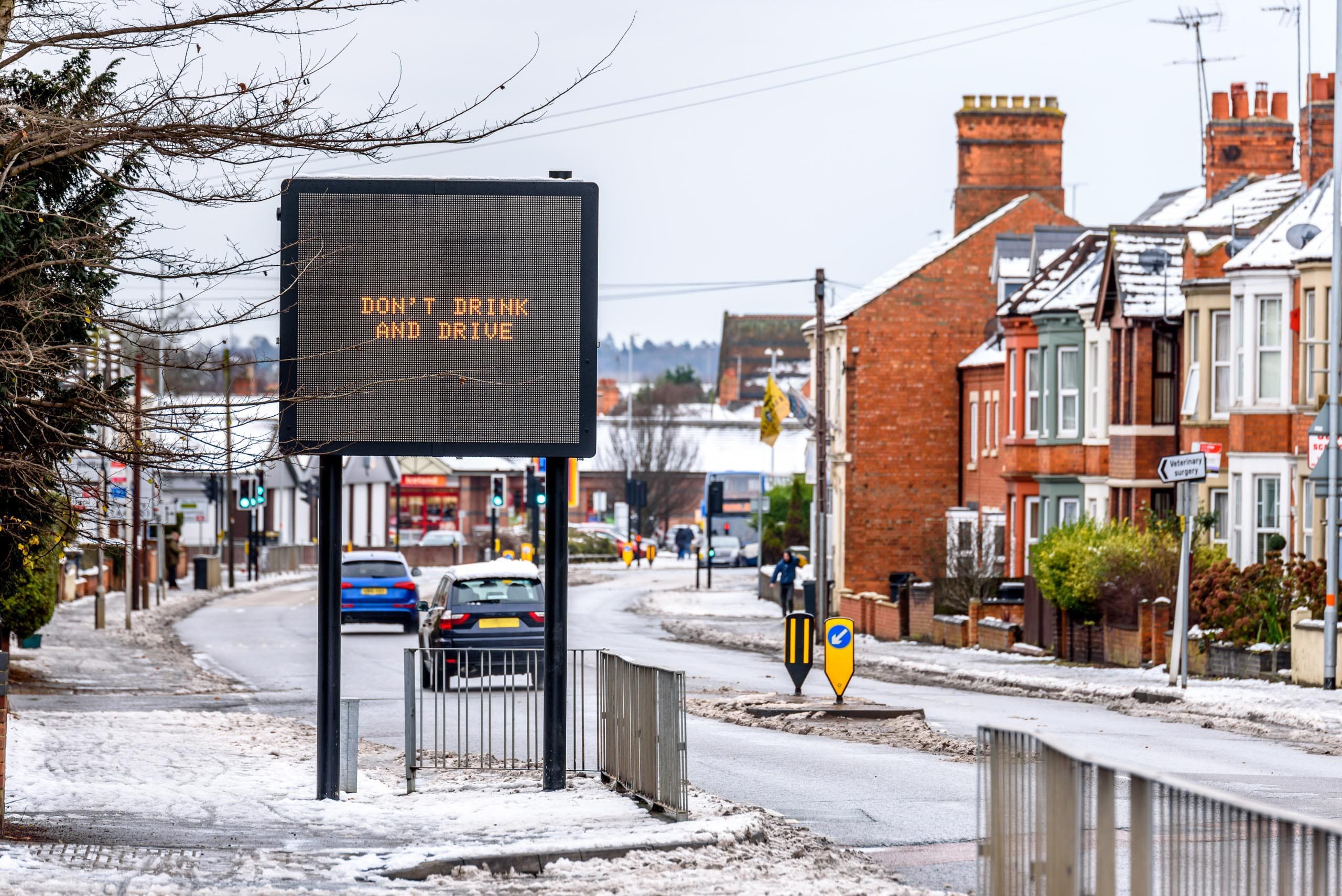
How can drivers protect different vulnerable road users in the winter?
How can drivers protect pedestrians in winter?
Drivers should slow down around crossings, junctions, residential streets and bus stops, especially when poor weather makes pedestrians harder to see. Road users should be ready to stop and allow people time to cross. Children, older adults and disabled pedestrians may need extra time.
At junctions, drivers should follow the Highway Code’s giving-way rules for pedestrians who are crossing or waiting to cross a road into which you are turning. Never assume someone can see your vehicle or judge your speed in heavy rain or low winter sun. (Source: Highway Code, rules H2 and 205–210)
How can drivers protect cyclists in winter?
Drivers should expect cyclists to ride further from the kerb or in the centre of the lane where this is safer. They may need to avoid ice, potholes, wet leaves or parked-car doors. Give them time to make these adjustments rather than pressuring them to move aside.
Before turning or changing lanes, drivers should check mirrors and blind spots carefully. They should also not turn across a cyclist’s path or overtake just before turning left. If you cannot leave enough space, wait until the road opens up. (Source: Highway Code, rules 163, 211–213)
How can drivers protect motorcyclists in winter?
Drivers should look carefully for motorcycles before pulling out at junctions or changing lanes. A motorcyclist may be less obvious than a larger vehicle, particularly in rain, fog or darkness.
They should also give riders room to avoid slippery patches and drain covers. Strong crosswinds and spray from larger vehicles can also affect their control and visibility. Keep a safe distance and avoid sudden manoeuvres. (Source: Highway Code, rules 211–213 and 232–233)
How can drivers protect horse riders on winter roads?
Reduce your speed early when approaching a horse and rider, and be prepared to stop. When passing, the Highway Code advises drivers to travel at under 10 mph and leave at least 2 metres of space. Avoid sounding your horn or revving your engine.
Take particular care on narrow rural roads, around bends and where horses may be affected by ice, wind or noise. Wait for a safe opportunity to pass rather than attempting a narrow overtake. (Source: Highway Code, rule 163; RoSPA)
Three checks before setting off in winter
- Check the forecast and decide whether the journey is necessary. Avoid driving in snow or ice unless essential.
- Clear all windows, demist mirrors and ensure lights and number plates are clean and visible.
- Allow extra journey time so you can drive more slowly, leave longer gaps and stop safely.
(Source: Highway Code, rules 228–229; Met Office)
What does the Highway Code say about winter driving?
The Highway Code requires headlights when visibility is seriously reduced, generally when you cannot see for more than 100 metres. Fog lights must be switched off when visibility improves. It also advises drivers to adjust speed and leave greater stopping distances in wet and snowy conditions.
The distinction between must and should matters. Must refers to a legal requirement; should is guidance that may still be relevant when considering safe driving. (Source: Highway Code, rules 226–230)
What should you do if a vulnerable road user is injured in a collision?
Make the scene safe without putting yourself or anyone else at risk. Call 999 where emergency help is needed and seek medical attention for injuries. Follow the legal requirements for stopping, exchanging details and reporting a collision where applicable.
If you were injured, or are helping someone who was, it may be useful to keep photographs, witness details and any available footage. If another road user failed to take reasonable care, a specialist solicitor can explain whether a compensation claim may be possible. Each case depends on its facts.
For rider-specific winter preparation, see the existing winter cycling and winter motorcycling guides.
Safer winter roads begin with giving others time and space
Wintery conditions leave less room for error. Drivers can make a real difference by checking carefully, slowing down and keeping a safe distance from people who have less protection on the road.
At Fletchers Solicitors, we support people affected by serious road collisions. If you or someone close to you has been injured and you are unsure what happens next, our specialist team can explain your options clearly and carefully. Speak to an expert today.



A national team, here when you need us
With offices across the UK, we’re never too far away, helping people access specialist advice and support wherever they are.
Our awards
-
THE TIMES BEST LAW FIRM
-

CHAMBERS TOP RANKED LAW FIRM
-

LEGAL 500 TOP TIER FIRM
-

ARMED FORCES COVENANT
-

AVMA - LAWYERS’ SERVICE MEMBER
-
HEADWAY ACCREDITED SOLICITORS
-

SIA - TRUSTED LEGAL PARTNER
-
CBIT - TRUSTED LEGAL PARTNER


Start your claim with confidence
Not sure where to start? We’ll listen, guide you, and give clear, honest advice on what to do next.