Winter cycling tips: how to stay safe on the road

Winter cycling brings shorter days, wet roads and changing conditions. You can reduce some risks by checking the weather, preparing your bicycle and adapting how you ride.
What this guide covers:
- How to decide whether it is safe to ride in winter weather
- The UK rules on bicycle lights and practical ways to improve visibility
- How to check your bike, handle slippery roads and position yourself safely
Should you cycle when the weather is bad?
Before you set off, make sure that you have checked the forecast, road conditions and whether you have a safer alternative. Conditions such as Ice and heavy rain can make an ordinary route hazardous, even for experienced cyclists.
When out on a ride, pay close attention to the condition of the road at shaded roads, particularly in places where its shaded or where leave or water collect. Ice can remain after exposed areas have thawed. If you’re unsure about grip, delay the journey, choose a safer route or use another form of transport. The Met Office and Cycling UK both advise considering alternatives in icy conditions.
Key checks before a winter ride
- Is there ice, standing water, snow, fog or a safer protected route?
- Will you be riding in darkness, and are your lights working and charged?
- Do your brakes, tyres and steering work properly, and can you ride without cold hands affecting your grip?
Key information
- 21% Police a vulnerable road user as difficult to see in 21% of fatal or serious collisions
- 54% of cyclist fatalities in reported road collisions occurred on rural roads in Great Britain
- 0.5m The Highway Code advises cyclists to keep at least 0.5 metres from the kerb on busy roads
What lights and clothing do you need if you’re cycling in the dark?
At night, the Highway Code says your bike must have a lit white front light and a lit red rear light. It must also have a red rear reflector and amber pedal reflectors if the bike was manufactured after 1 October 1985. These are legal requirements under rule 60. Before cycling, you should check that lights are:
- Correctly fitted
- Clean
- Visible
- Charged
Wearing bright or fluorescent clothing can help other road user see you. Reflective items can also help improve your visibility in the dark. These are sensible precautions, but wearing high-visibility clothing or a correctly fitted helmet aren’t legal requirement for cyclists.
When riding on unlit roads, it is advised that you use a front light that helps you see the route without dazzling other road user. Rule 60 permits flashing lights, but recommends a steady front lamp where there is no street lighting. It is also worth noting that using lights when the lighting it poor in the daytime may also help, although this isn’t the same as the legal night-time requirement. (Source: Highway Code rules 59 and 60)
How to prepare your bike for winter
A few minutes of maintenance can help you spot problems before they affect control. Winterly elements such as rain, road dirt and salt can increase wear of your bike, so checking your bike regularly is recommended, especially wet or dirty journeys.
A simple winter bike checklist
- Tyres: check the condition, as well as damage, tread where relevant and pressure against the tyre and bicycle manufacturer’s recommendations. Don’t reduce pressure below stated limits.
- Brakes: test both brakes before riding and check pads, discs or rims for wear and dirt.
- Lights and reflectors: check fittings, battery charge and that nothing obscures them.
- Chain and gears: wipe away grime, lubricate as recommended and check that gears work smoothly.
- Mudguards and luggage: ensure fittings are secure and cannot touch wheels.
After a wet ride:
- Try to remove grit and road salt
- Dry the bike
- Clean and lubricate the chain as appropriate.
If you’re unsure about tyres, worn brakes or other repairs, ask a qualified bike mechanic to inspect them.
Further guidance on this can be found with our partner Cycling UK.
How to cycle safely on wet, icy or snowy roads
The safest cycling technique changes with the surface. In rain, allow more room to stop and make your braking and steering smooth. Ice and snow can remove grip suddenly, so there are times when the safer choice is not to ride at all.
Cycling in rain
When cycling in the rain, make sure to slow down before bends and junctions. Brake progressively and, wherever possible, finish braking before turning. Bear in mind that painted road markings, metal covers, wet leaves and road debris can be slippery. Give yourself time to see hazards and avoid sudden swerves into traffic. The Met Office’s winter cycling advice recommends smooth braking and cornering on wet roads.
Cycling on icy roads or in snow
If you expect ice on the route, consider postponing your journey. Black ice can be difficult to see, particularly in the shade. Don’t assume a road or cycle path is safe because another section appears clear. If you encounter an icy stretch, avoid sharp steering or braking; stop somewhere safe and walk if necessary. Deep snow or freezing rain is a strong reason to choose another way to travel.
Specialist winter tyres may suit some cyclists, but they don’t make icy roads risk-free. Check tyre compatibility and get advice from a reputable cycle shop before changing equipment.
Cycling in fog or low winter sun
If fog limits how far you can see, you should reduce your speed and leave yourself more time to react. Before going out for a ride in the fog, ensure that you check that your lights are working and consider a different route or travel time if visibility is particularly poor. Low sun can make it difficult for you and other road users to see clearly, so anticipate possible late reactions at junctions. (Source: Met Office)
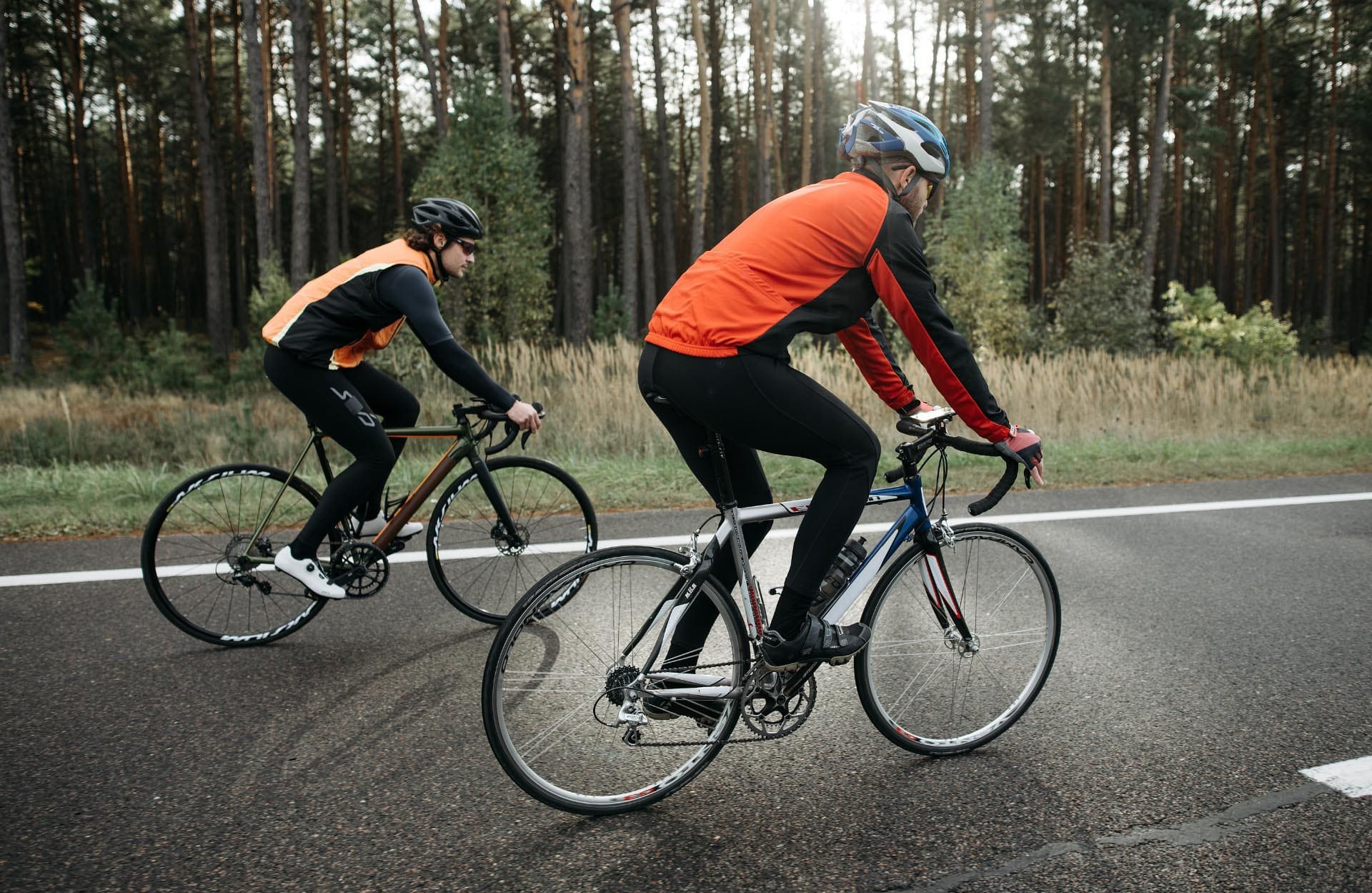
Where should cyclists position themselves on winter roads?
The Highway Code’s rule 72 advises cyclists to use the centre of the lane on quiet roads, in slower-moving traffic and when approaching junctions or in narrow areas where overtaking would be unsafe. On busy roads with faster-moving traffic, you should allow overtaking when it is safe to do so while staying at least 0.5 metres from the kerb, and further away where safer.
Rule 67 also advises leaving about a door’s width, or 1 metre, when passing parked vehicles to reduce the risk from opening doors. When on your bike, check behind you, signal when appropriate and avoid moving suddenly.
At junctions, make sure you look for turning vehicles and don’t ride up the inside of a large vehicle that may turn left. It is advised that you use cycle facilities when they make your journey safer; rule 61 does not generally require cyclists to use every available cycle lane. If a junction feels unsafe, you can stop in a suitable place and walk your bicycle across.
Drivers have responsibilities too. Under Highway Code rule 163, they should leave at least 1.5 metres when overtaking cyclists at speeds up to 30 mph, and more at higher speeds or in poor conditions. These are guidance distances for drivers, not a promise that every driver will give them. (Sources: Highway Code rules 61, 67, 72–74 and 163)
What should you carry on a winter cycle ride?
Take enough essentials to deal with a delay without becoming cold or stranded. What you need depends on the length, location and conditions of your journey. This may include:
- A charged phone and a way to contact someone if plans change
- A suitable puncture repair kit, pump and basic tools if you know how to use them
- A spare warm or waterproof layer for longer journeys
- Water and any medication or personal essentials you may need
(Source: Cycling UK)
What should you do after a cycling collision?
If anyone is seriously injured or there is immediate danger, call 999 and move to safety only if you can do so without making an injury worse. When it is safe, you should seek medical advice for injuries, even if they don’t seem serious at first.
If it’s safe, record the location, time and details of any vehicles or witnesses involved. Photos of the road surface, lighting, position of vehicles and damage may help explain what happened. Don’t put yourself at risk to gather evidence.
Drivers have legal duties to stop and provide details or report certain road accidents under the Road Traffic Act 1988. Those duties shouldn’t be described as a blanket reporting obligation on every cyclist in every incident. If someone leaves the scene, or you’re concerned about an offence, you should contact the police for advice.
If you are injured by another road user, our cycling accident experts can explain your options.
Winter cycling questions
Is it safe to cycle on black ice?
Black ice can cause a sudden loss of grip. If ice is forecast or visible on your route, the safer option may be to postpone the ride or travel another way. Avoid abrupt braking or turning if you encounter it.
Do cyclists legally need high-visibility clothing?
No. The Highway Code recommends clothing that helps you be seen but does not make high-visibility clothing a general legal requirement. Lights and reflectors at night are a separate legal requirement under rule 60.
Do I need bicycle lights during the day?
The Highway Code’s general rule 60 requirement applies at night. Using working lights during dull, rainy or foggy daytime conditions can be a sensible additional precaution.
Should I lower my tyre pressure in winter?
There is no single pressure that suits every bicycle and winter surface. Follow the tyre and bike manufacturers’ pressure limits, consider the tyres you use and ask a mechanic if you are unsure.
Can I cycle in snow?
Light snow may be manageable for some cyclists on suitable routes, but packed snow, hidden ice and poor visibility can make riding hazardous. Check local conditions and choose not to ride if you cannot do so safely.
Before your next winter ride
Check the conditions, prepare your bicycle and choose a route that suits your confidence and experience. You can adapt your plans when roads are slippery or visibility is poor. Staying safe does not depend on cyclists alone: drivers and other road users must also take care.


A national team, here when you need us
With offices across the UK, we’re never too far away, helping people access specialist advice and support wherever they are.
Our awards
-

THE TIMES BEST LAW FIRM
-

CHAMBERS TOP RANKED LAW FIRM
-

LEGAL 500 TOP TIER FIRM
-

ARMED FORCES COVENANT
-

AVMA - LAWYERS’ SERVICE MEMBER
-
HEADWAY ACCREDITED SOLICITORS
-

SIA - TRUSTED LEGAL PARTNER
-

CBIT - TRUSTED LEGAL PARTNER



Start your claim with confidence
Not sure where to start? We’ll listen, guide you, and give clear, honest advice on what to do next.