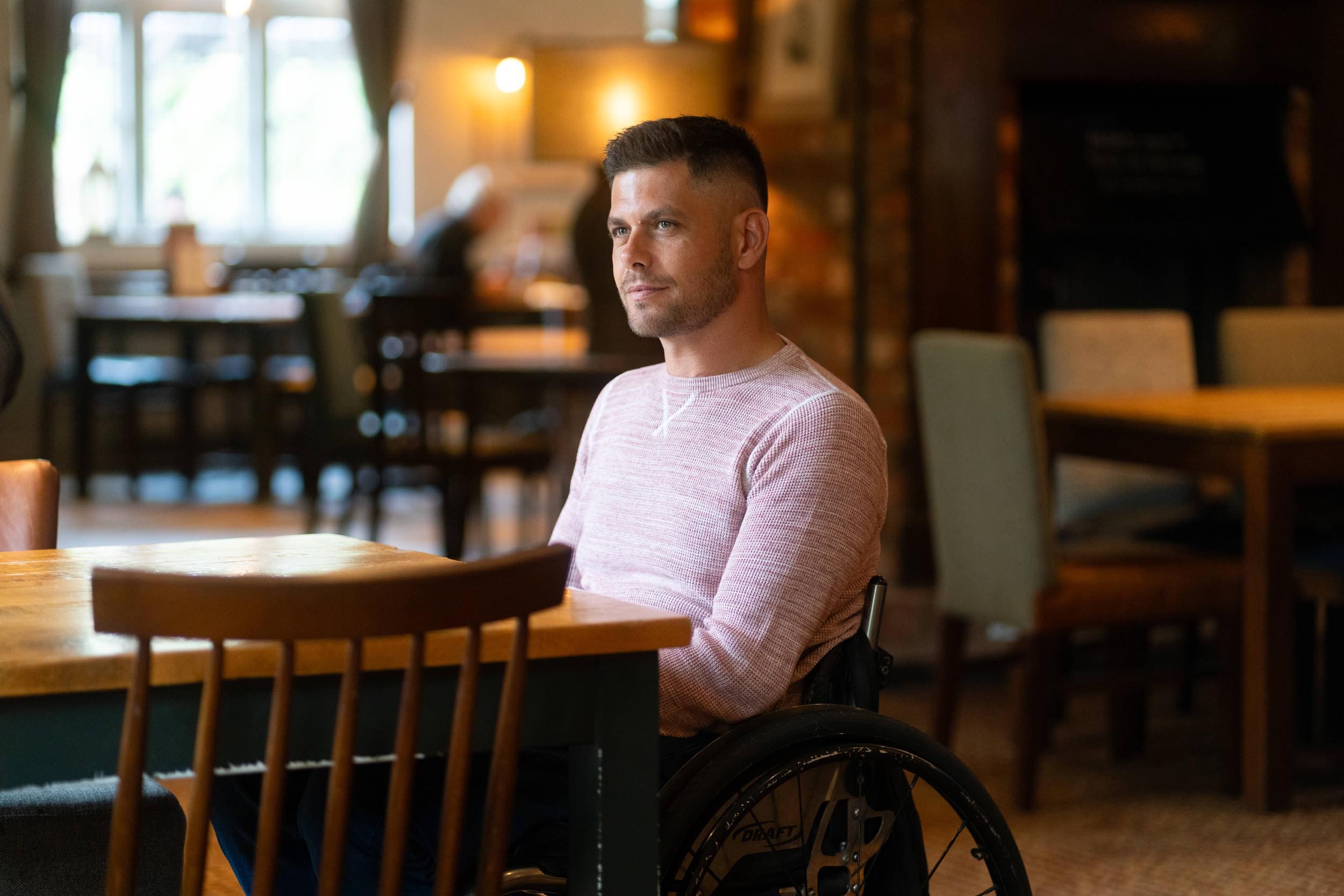
Tetraplegia compensation claims
Tetraplegia is one of the most serious and life-changing injuries a person can experience. If you or a loved one developed tetraplegia because of someone else's negligence, you may be entitled to make a compensation claim.
-
-
 TOP-RANKED LEGAL EXPERTS
CHAMBERS & LEGAL 500
TOP-RANKED LEGAL EXPERTS
CHAMBERS & LEGAL 500 -
NO WIN, NO FEE




Can I make a tetraplegia claim?
You can make a tetraplegia compensation claim when your condition was caused, or made worse, by someone else's negligence. Tetraplegia, also referred to as quadriplegia, describes paralysis in all four limbs following damage to the spinal cord. It affects your mobility, independence, ability to work, and almost every aspect of daily life.
Our specialist serious injury team is here to guide you through the tetraplegia claims process with consideration and care. You may be able to claim if your tetraplegia resulted from a road traffic collision, a fall from height, a workplace accident, a sports injury, or an assault. If your condition followed medical treatment, we can also look at whether there were errors in your care. This could include misdiagnosis, an incorrect surgical procedure, or an inappropriate medical intervention.
In every case, our first step is to understand exactly what happened and who was responsible. That could be another driver, an employer, a sports club, a personal trainer, or a medical professional. We investigate the full circumstances from the moment of the accident or treatment, helping us build the strongest possible case on your behalf.
Even if you are unsure whether you have a claim or if some time has passed since your injury, seeking legal advice is important. We will help you understand whether you have grounds for a claim.
Example of a tetraplegia claim
A motorcyclist is struck by a vehicle that failed to give way at a junction. The impact causes a severe spinal cord injury at the cervical level, resulting in tetraplegia.
If we can argue that the other driver was at fault for the collision, this could form the basis of a valid tetraplegia compensation claim.
Related tetraplegia claims we support
Expertise you can trust
- 9/10 clients would recommend us
- Dedicated rehabilitation and wellbeing team
- Securing interim payments to ensure early access to support


What compensation can help with


Funding your recovery and securing your long-term independence.
A tetraplegia injury is life-changing. Compensation is intended to reflect the full impact on your life – both now and in the future. People who suffer tetraplegia often need lifelong, round the clock care. Their homes are often not suitable to accommodate their injury, and so home adaptations are often required to help them live as independently as possible.
Because of this, tetraplegia compensation can be significant in value, so that we can properly fund the practical care needs, specialist treatment, mobility equipment, and the adaptations you need to live well. We work hard to make sure the settlement truly reflects the full impact of your injury.
Successful tetraplegia compensation claims may help fund:
- Specialist rehabilitation and physiotherapy
- Occupational therapy and psychological support
- Adaptations to your home and vehicle
- Specialist equipment and mobility aids
- Loss of earnings, including future lost income
- Ongoing care and support needs
- Medical expenses and medication costs
- Travel and transport costs related to your recovery
Understanding the potential value
Serious cases can result in very substantial settlements. We secured a £10 million settlement for a client whose motorcycle accident led to C2 tetraplegia, and £400,000 for a cyclist left with incomplete tetraplegia following a collision.
The value of a tetraplegia claim depends on the severity and completeness of the injury, your age, the impact on your ability to work, and the level of care and support you need going forward.
Compensation is calculated based on the unique circumstances of each case, and our team will give you an honest assessment from the outset.
Understanding interim payments
We understand that waiting for a claim to conclude can put serious financial pressure on you and your family – particularly in cases as serious as these, where care costs can start to mount significantly. Where possible, we will seek interim payments on your behalf, to help you access the care you need when you need it.
These are payments made during the claims process, before the final settlement is reached, and can help cover immediate costs – such as rehabilitation, specialist equipment, or home adaptations – so you don’t have to wait until the end of your claim to access the support you need.



Why choose Fletchers for your tetraplegia claim?
Tetraplegia claims are complex and emotionally challenging. The experience and specialist knowledge of the team around you can make a real difference to your outcome, and how you feel throughout the process. At Fletchers, our solicitors focus exclusively on serious personal injury, including tetraplegia and other spinal cord injury claims. We bring together legal expertise, trusted medical specialists, and genuine compassion for every client.
Expertise you can rely on
- Specialist serious injury solicitors with over 30 years of experience in complex spinal cord injury claims
- Ranked among the UK’s top 100 law firms, with a track record in high-value tetraplegia cases
- Multi-million-pound settlements secured, including a £10 million settlement for a client with C2 tetraplegia
- In-house rehabilitation support, coordinating care with neurologists, physiotherapists, occupational therapists, and psychologists
- Trusted network of expert witnesses to strengthen your case and establish liability
- Recognised by leading legal guides for serious personal injury law
- Rated by clients for care, communication, and support throughout the claims process
- ‘No Win, No Fee’, so you can pursue your claim without financial risk
You’re not alone
We understand what you and your family are going through.
We know how devastating it can be when you, or a member of your family, are diagnosed with a serious spinal condition. Whether you have complete or incomplete tetraplegia, the adjustment is profound. Recovery takes time, the right care, and the right people around you. And even with the right support – life can never be the same as it was before your injury.
The people we support through tetraplegia claims often experience a number of challenges alongside their paralysis; including the ability to speak, coughing and shortness of breath, incontinence, limb deterioration, muscle spasms, nerve pain and sexual dysfunction. These complications affect every part of life. Relationship dynamics can shift, as loved ones step into carer roles, and you might feel a real misalignment in your sense of self.
We know that much of your treatment is centred on pain relief and improving your quality of life – before you can even start to find a way forward. You may also need physical and occupational therapy to keep your joints and muscles strong. All of this comes at a financial cost – at a time when you may also be suffering lost earnings and feeling the weight of your financial responsibilities start to build.
We understand all of this, and we promise to be by your side through the claims process, fighting for an outcome that truly reflects your experience. We’ll investigate what happened, coordinate expert support, and keep you informed at every stage.


Rehabilitation support
We go beyond legal advice to support you, not just your case, making sure the right care and practical help are in place throughout the compensation claim process.
A message from our Rehabilitation and Wellbeing Team
We work alongside Fletchers Solicitors’ legal experts – listening carefully to your needs, helping you understand what support is available and creating a personalised recovery plan.
Led by rehabilitation manager Julie Chorlton, we bring together expertise across healthcare, therapy and welfare support, and can help arrange access to treatment and financial support. We also work with accredited mental health professionals, giving you and your family access to counselling quickly.
OUR REHABILITATION & WELLBEING TEAM



FAQs about tetraplegia claims
What is the average payout for a tetraplegia claim in the UK?
There is no single average figure for tetraplegia compensation. There are guidelines for general damages, but every claim is assessed on its own facts. The value depends on the severity and completeness of your injury, your age, how it affects your ability to work, and the level of care and support you need.
In addition to compensation for your injury, a settlement can also cover lost income, rehabilitation and medication costs, home and vehicle adaptations, and ongoing care needs. Our solicitors have previously secured £10 million for a client with C2 tetraplegia and £400,000 for a cyclist with incomplete tetraplegia.
Your case will be assessed individually, and we will give you an honest view from the start.
What is the difference between complete and incomplete tetraplegia?
Complete tetraplegia occurs when the spinal cord has been fully severed or so severely damaged that no signals can pass between the brain and the body below the injury site. There is no sensation or muscle control below that point.
Incomplete tetraplegia means the spinal cord was not fully severed. Some signals can still pass between the brain and the body, so there may be partial sensation, partial muscle control, or both. The degree of function varies from person to person. Both complete and incomplete tetraplegia can be the subject of a compensation claim.
What is the difference between tetraplegia and quadriplegia?
Tetraplegia and quadriplegia describe the same condition. Tetraplegia is the medical term most commonly used by clinicians in the UK, while quadriplegia is more widely used in the United States. Both refer to paralysis affecting all four limbs as a result of damage to the cervical region of the spinal cord.
How long does a tetraplegia compensation claim take?
Tetraplegia claims are complex and often take longer than straightforward personal injury cases. The timeline depends on factors such as how clear-cut the liability is, how your condition and prognosis develop over time, and whether expert evidence is disputed. Some cases settle within a few years; others take longer, particularly where ongoing care and future needs require detailed assessment.
We will keep you updated throughout the claims process and, where possible, seek interim payments to ease financial pressure while your case is ongoing.
How much time do I have to make a tetraplegia claim?
You typically have three years from the date of your injury to start a claim. However, there are exceptions. For example, if the injured person lacks mental capacity, or if symptoms or negligence only became apparent later. A court also has discretion to extend the time limit in certain circumstances, but this should not be relied on.
We recommend contacting us as soon as possible. We can advise you on your specific situation and make sure no important deadlines are missed.
What evidence is needed for a tetraplegia claim?
The evidence needed will depend on how your injury occurred. In accident cases, this typically includes details of the incident, medical records, witness statements, and evidence of the other party’s liability.
In medical negligence cases, we will review your full medical history and may instruct independent medical experts to assess whether the care you received fell below the required standard.
We handle all of this on your behalf, and you do not need to gather evidence yourself. Our team will investigate the full circumstances and bring in the expert witnesses needed to support your case.
What support is available during my tetraplegia claim?
We understand that a tetraplegia compensation claim involves far more than the legal process. As well as managing your case, we can help you access rehabilitation and specialist care as early as possible, and work to secure interim payments to cover immediate costs.
We work closely with neurologists, physiotherapists, occupational therapists, and psychologists as part of a coordinated approach to your recovery and care. Our team will keep you and your family informed throughout, and we will handle the complexity so you can focus on what matters most.
How much does it cost to make a tetraplegia claim?
We offer ‘No Win, No Fee’ arrangements for tetraplegia compensation claims, also known as conditional fee arrangements. This means you will not pay any legal fees if your claim is unsuccessful. We will explain the terms clearly before you proceed, so you always know exactly where you stand.
What is the recovery time for tetraplegia?
There is currently no known way to reverse the damage that leads to tetraplegia, but there are specific tetraplegia treatments and medications that can manage the symptoms better. Over time, some patients regain a degree of control over the affected areas of their bodies.


A national team, here when you need us
With offices across the UK, we’re never too far away, helping people access specialist advice and support wherever they are.
You’re in safe hands
-
THE TIMES BEST LAW FIRM
-
CHAMBERS TOP RANKED LAW FIRM
-
LEGAL 500 TOP TIER FIRM
-
ARMED FORCES COVENANT
-
SIA - TRUSTED LEGAL PARTNER
-
HEADWAY ACCREDITED SOLICITORS
-
CBIT - TRUSTED LEGAL PARTNER








Start your claim with confidence
Not sure where to start? We’ll listen, guide you, and give clear, honest advice on what to do next.